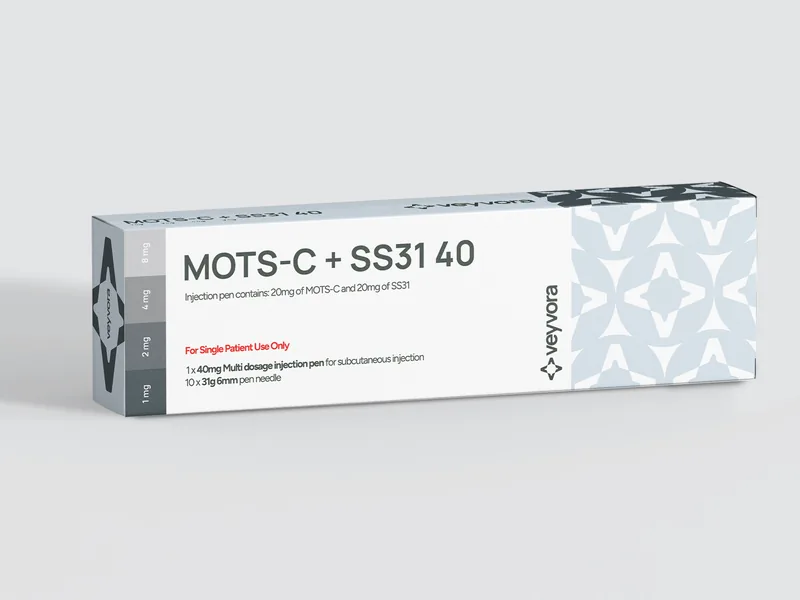
MOTS-c vs SS-31
Both are mitochondrial peptides, and both sit in the same research pen — but they approach the mitochondrion from opposite directions. One comes from it, the other targets it. That's the whole distinction.
derived vs targeting
MOTS-c is a mitochondrial-derived peptide — encoded within mitochondrial DNA and studied as a signalling molecule in metabolic research. SS-31 (elamipretide) is a mitochondria-targeting peptide, studied for its association with the inner mitochondrial membrane. MOTS-c comes from the mitochondrion; SS-31 concentrates at it.
signalling vs structure
The research angles differ accordingly. MOTS-c is examined on the signalling side — how a mitochondrial-derived peptide influences metabolism. SS-31 is examined on the structural side — its association with the membrane itself. Two different questions about the same organelle.
why they share a pen
Because they cover the signalling and structural sides between them, combining the two lets a single research model look at both — the reasoning behind the MOTS-c + SS-31 pen. Read the compound detail in the research explainer, and see how they relate to NAD+ in the same category.
verifying the blend
As a two-compound pen, the certificate of analysis should confirm each component's identity and proportion — see how to read a CoA. More in the longevity & cellular range.
research use only
Both compounds are supplied strictly for in-vitro and laboratory research use only — not medicines, not for human or veterinary consumption. Nothing here is dosing, medical or treatment guidance.
the research pens
Pre-filled, batch-numbered and independently assayed. Save one to your list and we'll email you the moment it's available in your country.