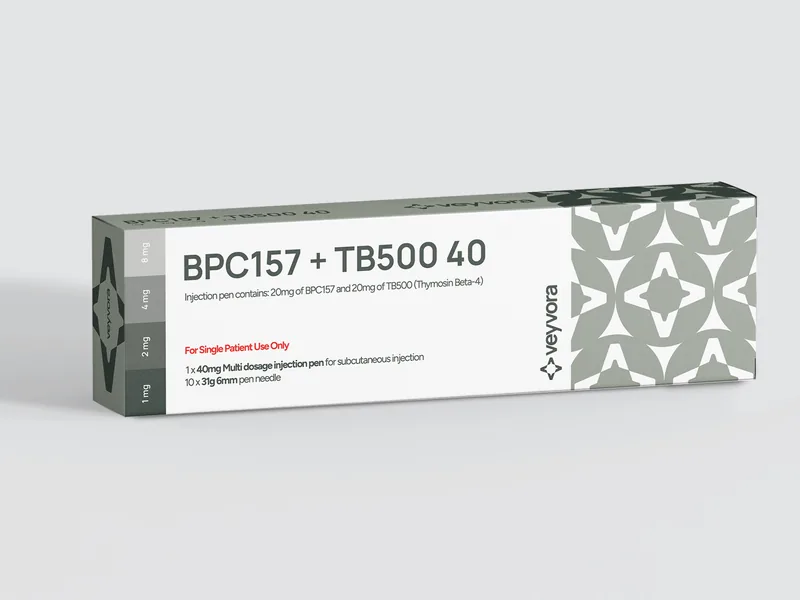

Langlebigkeit & Zelluläres
Pens für Zellenergie und Mitochondrien, untersucht in der Langlebigkeitsforschung.
Überblick
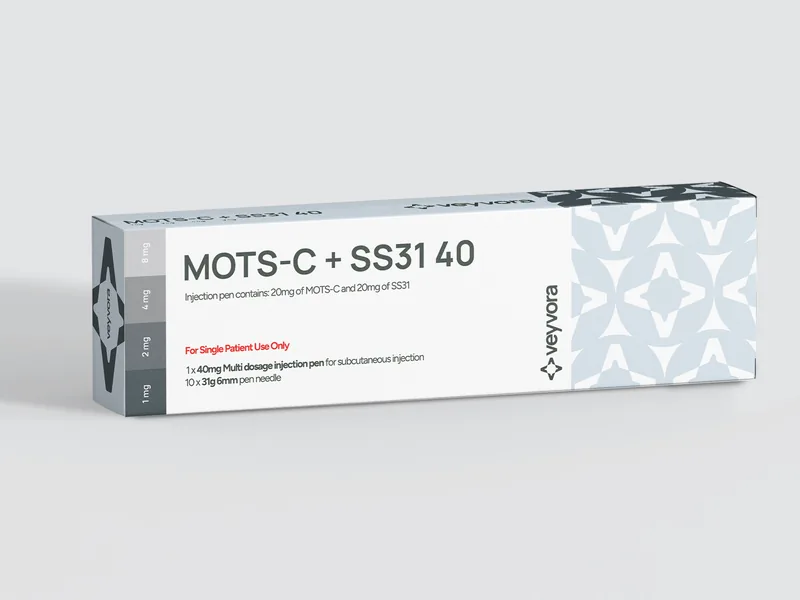
In der Zellenergie- und Langlebigkeitsforschung, auch an Universitäten und in industriellen Laboren in Österreich, zählen 2026 der NAD+-Forschungspen, der MOTS-c-Peptid-Pen und der SS-31-Peptid-Pen zu den drei am häufigsten gegenübergestellten In-vitro-Werkzeugen. Jedes davon greift an einem eigenen biologischen Mechanismus an: NAD+ ist ein Redox-Coenzym, das im Zusammenhang mit Sirtuin- und PARP-Signalwegen erforscht wird, während MOTS-c und SS-31 als mitochondrial assoziierte Peptide gelten, deren Rolle bei der AMPK-Aktivierung beziehungsweise der Cardiolipin-Bindung untersucht wird [1]. Sämtliche hier besprochenen Materialien sind ausschließlich für Labor- und In-vitro-Forschungszwecke bestimmt.
| Forschungswerkzeug | Biologische Kategorie | Primärer Forschungsmechanismus | Format (Veyvora, 2026) | Preis / Verfügbarkeit |
|---|---|---|---|---|
| NAD+ | Redox-Coenzym | Sirtuin-/PARP-Signalgebung; metabolischer Cofaktor-Pool | 3-ml-Pen, 300 Klicks à 133 µg pro Klick | Vor Bestellung bei Veyvora abklären |
| MOTS-c | mtDNA-kodiertes Peptid (16 Aminosäuren) | AMPK-/Folat-AICAR-Signalweg | 3-ml-Pen-Format | Vor Bestellung bei Veyvora abklären |
| SS-31 (Elamipretid) | Synthetisches Tetrapeptid | Cardiolipin-Bindung an der inneren Mitochondrienmembran | 3-ml-Pen-Format | Vor Bestellung bei Veyvora abklären |
Aktueller Preis und Verfügbarkeit sind für alle drei Werkzeuge vor jeder Kaufentscheidung unmittelbar bei Veyvora zu erfragen; diese Angaben werden an dieser Stelle bewusst nicht wiedergegeben, um veraltete kommerzielle Daten zu vermeiden.
Was dieser Leitfaden behandelt
Dieser Leitfaden stellt drei In-vitro-Forschungswerkzeuge — den NAD+-Forschungspen, den MOTS-c-Peptid-Pen und den SS-31-Peptid-Pen — anhand von biologischem Mechanismus, Pen-Format, Qualitätsnachweisen und Kühlkettenhandhabung gegenüber. An keiner Stelle werden Aussagen über Wirkungen am Menschen getroffen oder nahegelegt, und es findet sich hier keinerlei Hinweis zu Anwendung, Verabreichung oder Dosierung beim Menschen.
NAD+ ist ein Pyridin-Dinukleotid-Coenzym, das in Redox-, Sirtuin- und PARP-Signalwegen untersucht wird. MOTS-c und SS-31 sind mitochondrial assoziierte Peptide mit jeweils eigenständiger Rolle im Membran- beziehungsweise Kinase-Signalgeschehen. Die gegenwärtige Fachliteratur behandelt diese drei jedenfalls nicht als gegeneinander austauschbare Forschungswerkzeuge [1].
Auf Preis- und Bestandsangaben wird hier verzichtet, da sich diese ohne Vorwarnung ändern können; Forscherinnen und Forscher sollten die aktuelle Verfügbarkeit stets direkt bei Veyvora abklären, bevor sie eine Anschaffung tätigen. Zur zugrunde liegenden Coenzym-Biologie liefert die Seite NAD+-Forschung im Detail weiterführenden Mechanismus- und Evidenzkontext.
Forschungsbereiche und Sortimentseinträge
Der Langlebigkeits-Forschungskatalog von Veyvora umfasst für 2026 drei eigenständige Pen-Format-Werkzeuge — den NAD+-Forschungspen, den MOTS-c-Peptid-Pen und den SS-31-Peptid-Pen —, die jeweils einer eigenen mechanistischen Kategorie zuzuordnen sind und ausschließlich für die In-vitro-Laborforschung geliefert werden.
NAD+-Forschungspen
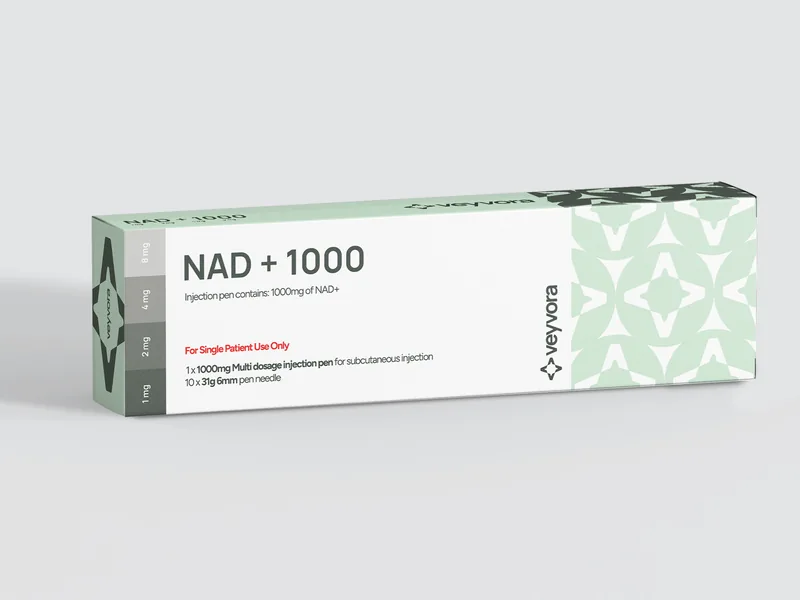
NAD+ (Nicotinamidadenindinukleotid) ist ein Pyridin-Dinukleotid-Coenzym, das im Rahmen der Redoxbiologie, der Sirtuin-Aktivierung sowie der PARP-vermittelten DNA-Reparatur-Signalgebung erforscht wird. Im Zentrum des Forschungsinteresses steht dabei weniger eine Peptid-Membran-Wechselwirkung als vielmehr die Größe des Coenzym-Pools sowie die dafür verantwortlichen Enzyme NAMPT, NMNAT und CD38. Der NAD+ 1000 Forschungspen findet sich im Veyvora-Katalog 2026 als 3-ml-Pen-Gerät mit 300 Klicks à 133 µg pro Klick, inklusive Dosierkarte und 31G-6-mm-Pen-Nadeln. Verfügbarkeit und Preis sind vor jeder Anschaffung jedenfalls direkt bei Veyvora zu bestätigen.
MOTS-c- und SS-31-Peptid-Pens
MOTS-c ist ein aus 16 Aminosäuren bestehendes, in der mitochondrialen DNA kodiertes Peptid, dessen Aktivität an AMPK- und Folat-AICAR-Signalwegen erforscht wird [1]. SS-31 (Elamipretid) ist ein synthetisches Tetrapeptid, das im Hinblick auf seine Bindungsfähigkeit an Cardiolipin an der inneren Mitochondrienmembran untersucht wird [1]. Keines der beiden Peptide teilt sich eine mechanistische Kategorie mit der NAD+-Coenzym-Biologie, und die aktuelle begutachtete Fachliteratur führt die drei Werkzeuge nicht als untereinander austauschbar. Den gemeinsamen Forschungshintergrund dieser beiden mitochondrialen Peptide liefert die Seite MOTS-c- und SS-31-Forschung im Detail.
Veyvora gibt an, dass jede Charge über alle drei Pen-Formate hinweg von zwei unabhängigen Laboren mittels HPLC, Massenspektrometrie und Endotoxin-Test kontrolliert wird, mit einem angegebenen Reinheitsschwellenwert von über 98 % (Veyvora-Qualitätsdokumentation, 2026). Wer Chargen-Analysenzertifikate auswertet, sollte vorab die Seite HPLC-Reinheit richtig lesen konsultieren, bevor er aus dem Reinheitsfeld Schlüsse zieht.
Die Forschungsrollen im Vergleich
NAD+, MOTS-c und SS-31 besetzen in der Zellenergieforschung jeweils eigene mechanistische Kategorien. Die Wahl zwischen ihnen richtet sich nach dem untersuchten Signalweg, nicht nach einer gemeinsamen Einordnung.
| Eintrag | Identität | Zentrale Forschungsfrage | Pen-Format (Veyvora, 2026) | Dokumentation |
|---|---|---|---|---|
| NAD+ | Pyridin-Dinukleotid-Coenzym | Redoxgleichgewicht, Sirtuin- und PARP-Signalgebung; Regulierung des Coenzym-Pools über NAMPT, NMNAT und CD38 | 3 ml, 300 Klicks, 133 µg pro Klick; 31G-6-mm-Nadeln im Lieferumfang | Chargen-CoA: HPLC, MS, Endotoxin; Reinheitsschwellenwert über 98 % angegeben (Veyvora, 2026) |
| MOTS-c | 16-Aminosäuren-Peptid, mtDNA-kodiert | AMPK-Aktivierung und Folat-AICAR-Signalweg [1] | Aktuelles Format bei Veyvora abklären | Chargen-CoA: HPLC, MS, Endotoxin; Reinheitsschwellenwert über 98 % angegeben (Veyvora, 2026) |
| SS-31 (Elamipretid) | Synthetisches Tetrapeptid | Cardiolipin-Bindung an der inneren Mitochondrienmembran [1] | Aktuelles Format bei Veyvora abklären | Chargen-CoA: HPLC, MS, Endotoxin; Reinheitsschwellenwert über 98 % angegeben (Veyvora, 2026) |
Wer Redox- oder Sirtuin-Signalwege erforscht, greift zum NAD+-Forschungspen; wer sich mit der Dynamik der Mitochondrienmembran befasst, wählt SS-31; wer AMPK-vermittelte metabolische Signalgebung untersucht, wählt MOTS-c. In der begutachteten Fachliteratur gilt keines der drei Werkzeuge als Ersatz für ein anderes [1].
Bevor Sie sich auf eine bestimmte Charge festlegen, gleichen Sie diese anhand der Seite Charge gegen CoA verifizieren ab, um sicherzustellen, dass Identität, Reinheit und Endotoxinwerte zu Ihren Protokollanforderungen passen. Hinweise zur Einhaltung der dokumentierten Lagerbedingung von 2–8 °C über alle drei Formate hinweg liefert die Seite Lagerung und Stabilität.
Formatspezifikationen sowie Preis in Euro und Verfügbarkeit für Österreich sind für die MOTS-c- und SS-31-Pens vor jeder Kaufentscheidung direkt bei Veyvora zu bestätigen; alle drei Pen-Formate werden ausschließlich für die In-vitro-Laborforschung geliefert.
Grenzen der Evidenz
Die drei in diesem Leitfaden behandelten Forschungswerkzeuge bewegen sich auf unterschiedlichen Stufen der Evidenzhierarchie. Die NAD+-Coenzym-Biologie stützt sich auf umfangreiche mechanistische und präklinische Literatur zu NAMPT-, NMNAT- und CD38-Signalwegen, Sirtuin-Aktivierung und PARP-Signalgebung. Die Forschung zu MOTS-c und SS-31 bewegt sich überwiegend auf Ebene des Peptidmechanismus und in einem frühen präklinischen Stadium: MOTS-c wird über AMPK- und Folat-AICAR-Signalweg-Studien charakterisiert, SS-31 über Cardiolipin-Bindungsassays an der inneren Mitochondrienmembran [1].
Was die Evidenz zeigt — und was nicht
Mechanistische Befunde aus zellfreien oder zellbasierten Assays belegen Wechselwirkungen entlang bestimmter Signalwege unter kontrollierten In-vitro-Bedingungen; sie sagen jedoch nichts über Wirksamkeit oder Sicherheit in lebenden Systemen aus. Präklinische Daten an Nagetieren, soweit für eine dieser Verbindungen überhaupt vorhanden, lassen sich ohne unabhängige klinische Validierung nicht auf den Menschen übertragen. Keine einzige zwischen 2024 und 2026 erschienene begutachtete Arbeit behandelt NAD+, MOTS-c und SS-31 als austauschbare Langlebigkeitswerkzeuge oder stellt einen direkten In-vitro-Methodenvergleich zwischen allen dreien an [1]. Wer damit arbeitet, sollte jede Verbindung als mechanistisch eigenständig betrachten und das Assay-Design entsprechend ausrichten.
Sämtliche im Veyvora-Forschungspeptid-Katalog verfügbaren Materialien sind ausschließlich für die In-vitro-Laborforschung bestimmt.
Prüfpunkte für den Laboreinkauf
Vergewissern Sie sich vor der Bestellung eines Langlebigkeitswerkzeugs in Forschungsqualität, dass der Anbieter chargenspezifische Unterlagen bereithält, mindestens bestehend aus: Identitätsnachweis mittels Massenspektrometrie, HPLC-Reinheit mit angegebenem Schwellenwert sowie einem Endotoxin-Testergebnis. Veyvora gibt an, jede Charge von zwei unabhängigen Laboren mittels HPLC, Massenspektrometrie und Endotoxin-Test prüfen zu lassen, mit einem Reinheitsschwellenwert von über 98 % (Veyvora-Qualitätsdokumentation, 2026).
Fordern Sie vor der Verwendung das Analysenzertifikat zur konkreten Chargennummer an und prüfen Sie, ob das angegebene Molekulargewicht dem theoretischen Wert der bestellten Verbindung entspricht: NAD+ (663,43 g/mol), MOTS-c (2174,5 g/mol) oder SS-31 (640,8 g/mol). Gleichen Sie die Chargennummer auf dem CoA jedenfalls vor jeder Laborverwendung mit dem Etikett auf dem Pen ab.
Format- und Gerätespezifikation
Der NAD+-Forschungspen ist als 3-ml-Gerät mit 300 Klicks à 133 µg pro Klick gelistet und wird samt Dosierkarte und 31G-6-mm-Pen-Nadeln geliefert (Veyvora-Gerätespezifikation, 2026). Formatspezifikationen zum MOTS-c- und SS-31-Peptid-Pen sind bei der Bestellung mit Veyvora abzuklären; aktuelle Produktverfügbarkeit und Preis sollten für alle drei Formate vor der Anschaffung direkt bei Veyvora eingeholt werden.
Kühlkette und Handhabung
Der dokumentierte Versandprozess von Veyvora setzt auf isolierte, mit Kühlakkus versehene Kartons, Versandtaschen für 2–8 °C sowie einen Temperaturindikatorstreifen, wobei der Versand laut Angabe innerhalb von 24 Stunden erfolgt (Veyvora-Handhabungsspezifikation, 2026). Prüfen Sie bei Erhalt zunächst den Temperaturindikator, bevor Sie die Sendung annehmen, und lagern Sie anschließend gemäß den chargenspezifischen Stabilitätsdaten auf dem Analysenzertifikat.
Verwandte Forschungs- und Vergleichsseiten
Wer die Einkaufs- und Verifizierungskriterien auf dieser Seite durchgearbeitet hat, sollte die Chargenidentität anhand des Analysenzertifikats bestätigen, bevor die In-vitro-Arbeit beginnt. Die folgenden Seiten behandeln jeweils die eigenständige Aufgabe, die sich daraus in weiterer Folge ergibt.
Analytische Verifizierung
Bestätigen Sie vor Annahme einer Sendung, dass die gemeldete HPLC-Reinheit den angegebenen Schwellenwert erreicht und das Molekulargewicht dem theoretischen Wert der bestellten Verbindung entspricht. Die Seite HPLC-Reinheit richtig lesen erklärt die Analysemethode sowie die Bedeutung der einzelnen Felder eines Reinheitsberichts. Liegt das CoA vor, bietet Charge gegen CoA verifizieren eine strukturierte Checkliste zum Abgleich von Chargennummer, Identität, Reinheit und Stabilitätsdaten.
Mechanistischer und vergleichender Kontext
Wer zwischen den beiden mitochondrialen Peptidwerkzeugen abwägt, findet im Vergleich MOTS-c und SS-31 Format- und Spezifikationsunterschiede in einheitlicher Darstellung. Die mechanistische Grundlage für die gemeinsame Betrachtung von MOTS-c und SS-31 behandelt die Seite MOTS-c- und SS-31-Forschung im Detail, die die jeweils eigenständigen Signalwege — AMPK/Folat-AICAR für MOTS-c, Cardiolipin-Bindung für SS-31 — beschreibt, ohne sie mit der NAD+-Coenzym-Biologie zu vermengen. Zum Coenzym selbst liefert NAD+-Forschung im Detail den passenden mechanistischen Hintergrund.
Quellen
[1] Kim, K.-H. et al. (2014). Mitochondrial peptide MOTS-c: a regulator of hepatic glucose metabolism and mitochondrial energy homeostasis. PubMed Central. https://pmc.ncbi.nlm.nih.gov/articles/PMC4112140/