
Reparatur & Regeneration
Gewebereparatur-Pens, untersucht in der Regenerations- und Regenerationsforschung.
Das Wichtigste in Kürze
Diese Seite erklärt, was BPC-157 und TB-500 als synthetische Referenzmaterialien sind, worin sich ihre Forschungsmechanismen unterscheiden, was die derzeitige Evidenzlage hergibt und worauf österreichische Labore vor der Anschaffung achten sollten. Sämtliche behandelten Materialien dienen ausschließlich der Labor- und In-vitro-Forschung.
- BPC-157 und TB-500 greifen an unterschiedlichen Stellen der Reparaturkaskade an und lassen sich innerhalb eines Protokolls nicht gegeneinander austauschen.
- Die Evidenzlage ist bei beiden Materialien überwiegend präklinisch; Sicherheit und Wirksamkeit am Menschen sind für keines der beiden geklärt.
- Vor Aufnahme eines Materials in ein Protokoll ist eine chargenspezifische CoA-Dokumentation zu Peptidsequenz, HPLC-Reinheit, massenspektrometrischer Identität und Endotoxin-Screening zwingend erforderlich.
BPC-157 ist ein stabiles, aus dem Magen stammendes Pentadecapeptid, das in Zellkulturen und Tiermodellen im Hinblick auf berichtete Effekte auf Angiogenese, Kollagensynthese und Stickstoffmonoxid(NO)-Signalgebung untersucht wird. TB-500 ist ein mit Thymosin β4 verwandtes synthetisches Fragment, dessen Rolle bei Aktin-Reorganisation, Endothelzellmigration und Stammzellrekrutierung erforscht wird. Für keines der beiden Materialien liegt eine Marktzulassung des BASG (Bundesamt für Sicherheit im Gesundheitswesen) oder der European Medicines Agency (EMA) für eine humanmedizinische Anwendung vor.
Eine orthopädische systematische Übersichtsarbeit aus 2025 identifizierte 39 geeignete BPC-157-Studien aus dem Zeitraum 1993–2024, davon 35 präklinisch [2]. Genau dieses Verhältnis kennzeichnet die Evidenzlage: Es handelt sich um Forschungswerkzeuge zur Modellierung von Reparaturwegen, nicht um klinische Produkte. Darauf baut die Kategorie von Veyvora auf, indem sie BPC-157 und TB-500 als einander ergänzende Referenzmaterialien für Labore führt, die Gewebereparaturmechanismen auf zellulärer und präklinischer Ebene erforschen.
Im Sortiment Reparatur & Regeneration lässt sich die verfügbare Chargendokumentation innerhalb der Kategorie vergleichen; im Forschungspeptid-Katalog von Veyvora findet sich das gesamte Angebot an Referenzmaterialien samt Qualitätsdokumentation des Anbieters.
Was diese Kategorie umfasst
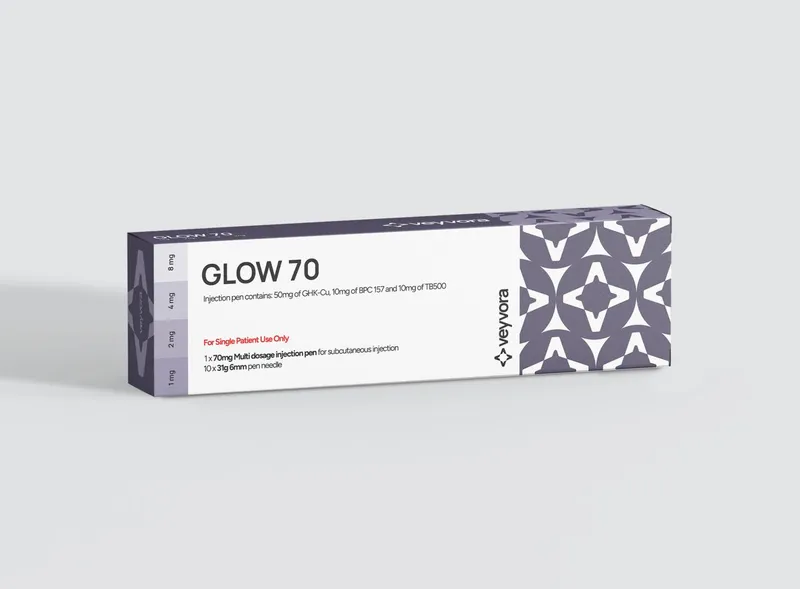
In der Kategorie Forschungspeptide für Reparatur & Regeneration liefert Veyvora BPC-157 und TB-500 gemeinsam in einem einzigen kombinierten Forschungspen für die Labor- und In-vitro-Forschung zu Gewebereparaturmechanismen — darunter Angiogenese, Kollagensynthese, Fibroblastenaktivität und Zellmigration. Angesprochen werden damit auch Forschungsgruppen an österreichischen Universitäten und in industriellen Laboren, die vergleichbare Referenzmaterialien für ihre Protokolle suchen.
BPC-157 wird in muskuloskelettalen, gastrointestinalen und vaskulären Verletzungsmodellen erforscht. TB-500 wiederum wird auf seine Rolle bei Stammzellrekrutierung, Aktin-Reorganisation und antifibrotischem Remodeling hin untersucht. Dass laut der orthopädischen Übersichtsarbeit aus 2025 35 von 39 geeigneten BPC-157-Studien präklinisch waren [2], steckt die Evidenzgrenze der Kategorie ab: Beide Peptide dienen der Modellierung von Reparaturwegen, nicht der klinischen Anwendung.
Wer die beiden Peptide auf mechanistischer Ebene gegenüberstellen möchte, findet im Vergleich BPC-157 versus TB-500 eine strukturierte Signalweganalyse. Bevor Sie einen Reinheitswert aus einem Analysenzertifikat (CoA) interpretieren, lohnt ein Blick in was HPLC-Reinheit beweist — und was nicht, wo die analytischen Grenzen erklärt sind, die für beide Materialien gelten.
Forschungsbereiche und Sortimentseinträge
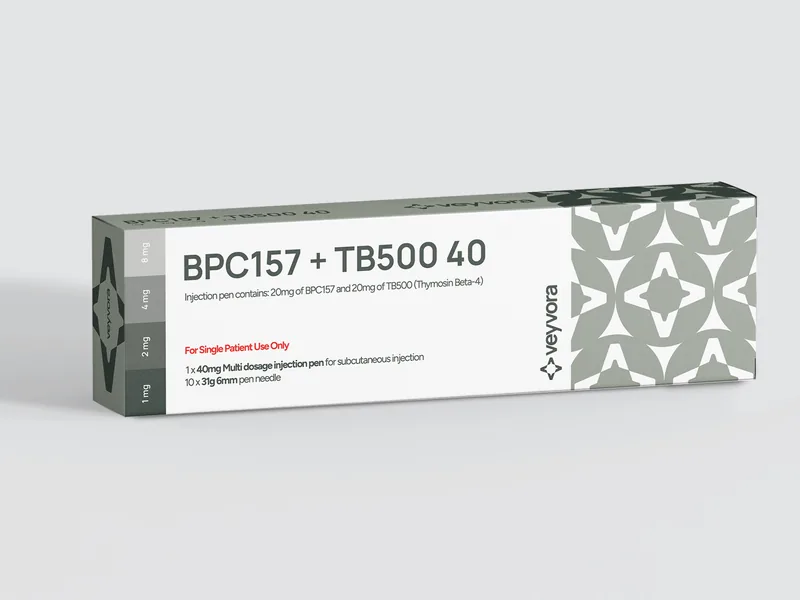
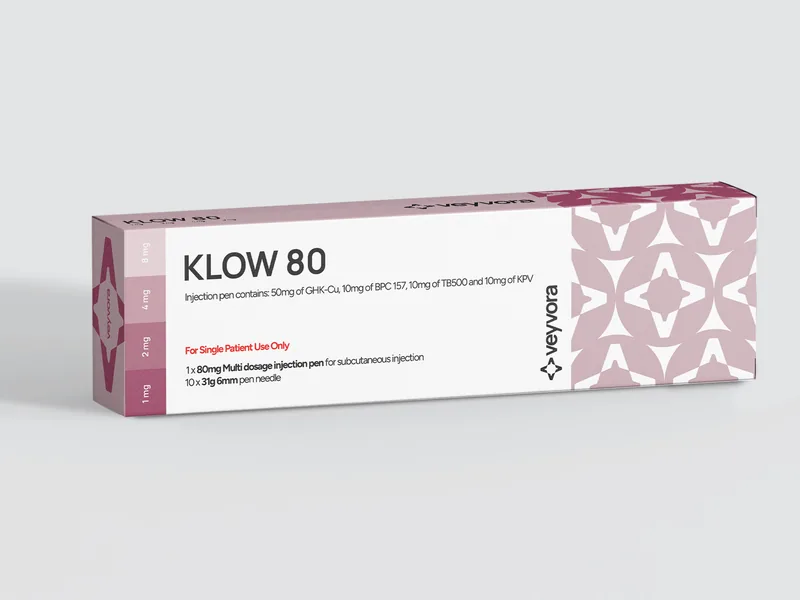
Veyvora liefert BPC-157 und TB-500 gemeinsam als einen einzigen kombinierten Forschungspen, den BPC-157 + TB-500 40 mg Pen. Die beiden Peptide wirken über eigenständige, einander ergänzende Signalwege — genau das ist der Grund, warum sie in einem Pen kombiniert und nicht als getrennte SKUs geführt werden.
BPC-157
BPC-157 ist ein stabiles, gastrisches Pentadecapeptid, das in muskuloskelettalen, gastrointestinalen und vaskulären Verletzungsmodellen erforscht wird; die präklinische Forschung prüft dabei berichtete Effekte auf Angiogenese, Kollagensynthese, Fibroblastenproliferation und NO-Signalgebung [2]. Die orthopädische Übersichtsarbeit aus 2025 identifizierte 39 geeignete Studien aus 1993–2024, davon 35 präklinisch und nur eine klinisch; die Autoren kamen zum Schluss, dass Sicherheit und therapeutischer Nutzen am Menschen weiterhin ungeklärt sind [2]. In diesem Sortiment dient BPC-157 als Werkzeug zur Untersuchung lokaler Gewebewiderstandsfähigkeit, der Reparatur von Sehnen-Band-Übergängen und der Heilung der gastrointestinalen Schleimhaut in Zell- und Tiermodellen.
TB-500
TB-500 ist ein mit Thymosin β4 verwandtes synthetisches Fragment, dessen Rolle bei Aktin-Reorganisation, Endothelzellmigration, Stamm- und Vorläuferzell-Homing sowie antifibrotischem Remodeling untersucht wird. In präklinischen Modellen kam TB-500 in kardialen, dermalen, kornealen und muskuloskelettalen Reparaturkontexten zum Einsatz, mit Schwerpunkt auf vorgelagerter Rekrutierung und Vaskularisierungssignalgebung statt auf lokalem Zellschutz. Eine Scoping-Review aus 2026 zu Thymosin β4 und verwandten Fragmenten berichtete über vielversprechende Gewebereparatursignale in Tiermodellen, wies aber auch auf erhebliche Standardisierungslücken sowie eine spärliche und methodisch uneinheitliche klinische Studienbasis hin.
Diese zwei Einträge unterscheiden sich in primärem Mechanismus und Zielgewebe-Profil deutlich und sind innerhalb eines Forschungsprotokolls nicht als austauschbar zu behandeln. Formulierungsdetails — einschließlich der Spezifikation des vorgefüllten Lösungspens und bestätigter Reinheitswerte — gehören dem chargenspezifischen CoA entnommen, nicht aus Beschreibungen auf Kategorieebene abgeleitet. Verifizieren Sie eine Charge vor der Verwendung anhand ihres CoA und prüfen Sie die Hinweise zu Lagerung und Stabilität, um die Kühlkettenanforderungen jedes Materials zu bestätigen.
Die Forschungsrollen im Vergleich
BPC-157 und TB-500 greifen an unterschiedlichen Stellen der Reparaturkaskade an und sollten je nach untersuchtem Mechanismus gewählt werden.
| Kriterium | BPC-157 | TB-500 |
|---|---|---|
| Strukturelle Identität | Stabiles synthetisches Pentadecapeptid aus einem Magensaftprotein abgeleitet | Synthetisches Fragment, verwandt mit Thymosin β4 |
| Primärer Forschungsmechanismus | Lokaler Zellschutz; Focal-Adhesion-Kinase-Paxillin-Signalgebung; Modulation des NO-Signalwegs; Hochregulierung des Wachstumshormonrezeptors [2] | Aktin-Reorganisation; Endothelzellmigration; Stamm- und Vorläuferzell-Homing; antifibrotisches Remodeling |
| Vorherrschende präklinische Modelle | Reparatur von Sehnen-Band-Übergängen, Heilung der gastrointestinalen Schleimhaut, muskuloskelettale und vaskuläre Verletzungen [2] | Kardiale Reparatur nach Infarkt, dermaler Wundverschluss, korneale und muskuloskelettale Regeneration |
| Evidenzstufe (Stand 2025–2026) | 35 von 39 geeigneten Studien präklinisch (1993–2024); eine klinische Studie identifiziert; Sicherheit am Menschen ungeklärt [2] | Vielversprechende präklinische Signale; klinische Studienbasis als spärlich und methodisch uneinheitlich beschrieben |
| Typisches Format | Gemeinsam geliefert in einem vorgefüllten 3-ml-Lösungspen; Reinheit vor Gebrauch anhand des Chargen-CoA bestätigen | Gemeinsam geliefert in einem vorgefüllten 3-ml-Lösungspen; Reinheit vor Gebrauch anhand des Chargen-CoA bestätigen |
| Chargendokumentation | Chargenspezifisches CoA erforderlich; Werte nicht zwischen Chargen übertragbar | Chargenspezifisches CoA erforderlich; Werte nicht zwischen Chargen übertragbar |
BPC-157 wirkt lokal als zellschützendes Modell und eignet sich für die Untersuchung von Übergangsreparatur und Schleimhautwiderstandsfähigkeit direkt am Verletzungsort [2]; TB-500 hingegen setzt weiter vorgelagert an und ist damit das passendere Werkzeug für die Erforschung systemischer Rekrutierung, Vaskularisierung und Fibrosebegrenzung. Innerhalb eines präklinischen Programms lassen sich die beiden Peptide durchaus als einander ergänzende Modelle einsetzen — BPC-157 für die lokalisierte Gewebereaktion, TB-500 für Rekrutierung und Remodeling —, sofern jede kombinierte oder aufeinanderfolgende Verwendung strikt mechanistisch und nicht-klinisch bleibt, ohne Rückschlüsse auf den Menschen.
Grenzen der Evidenz
Die Evidenzlage ist bei BPC-157 wie bei TB-500 überwiegend präklinisch, und das hat unmittelbare Konsequenzen dafür, wie Laborforscher ihre Protokolle gestalten und Ergebnisse einordnen sollten.
Die orthopädische Übersichtsarbeit aus 2025 stellte fest, dass 35 von 39 geeigneten BPC-157-Studien präklinisch und nur eine klinisch war; die Autoren schlossen daraus, dass Sicherheit und therapeutischer Nutzen am Menschen weiterhin ungeklärt sind [2]. Die Scoping-Review aus 2026 zu Thymosin β4 und verwandten Fragmenten berichtete über vielversprechende Gewebereparatursignale in Tiermodellen, wies jedoch auf erhebliche Standardisierungslücken sowie eine spärliche und methodisch uneinheitliche klinische Studienbasis hin.
Präklinische Befunde — etwa Veränderungen der Kollagenablagerung, der Expression angiogener Marker oder der Qualität des Frakturkallus — beschreiben mechanistische Signale in Zell- und Tiermodellen, nicht klinische Wirksamkeit, Sicherheit oder Verträglichkeit beim Menschen. Weder BPC-157 noch TB-500 verfügen über eine Marktzulassung des BASG oder der EMA für irgendeine humanmedizinische Indikation.
HPLC-Reinheit allein bestätigt weder Identität noch Konzentration noch die Unversehrtheit der Kühlkette über Chargen hinweg; eine massenspektrometrische Identitätsbestätigung sowie ein Endotoxin-Screening gehören ebenfalls ins CoA, bevor Material in ein Protokoll eingeht. Die vollständigen analytischen Grenzen erklärt die Seite HPLC-Reinheit erklärt.
Prüfpunkte für den Laboreinkauf
Österreichische Labore, die 2026 BPC-157 und TB-500 anschaffen, sollten Identitätsbestätigung, chargenspezifische Dokumentation und regulatorische Kennzeichnung allem anderen voranstellen. Material muss eine ausdrückliche Kennzeichnung „nur für Forschungszwecke” tragen und darf nicht mit therapeutischen Angaben oder Hinweisen auf eine Anwendung am Menschen versehen sein; das BASG hat klargestellt, dass es eine Forschungszweck-Kennzeichnung dann ignoriert, wenn der werbliche Kontext eine medizinische Verwendung nahelegt [3]. BPC-157 und TB-500 unterliegen Anfang 2026 keiner Kontrolle nach dem Suchtmittelgesetz (SMG), doch dieser Status mindert die Verpflichtung zu einer strengen internen Qualitätskontrolle keineswegs [4].
Dokumentations- und Identitätsprüfungen
Ein chargenspezifisches CoA sollte vier Punkte bestätigen, bevor Material in ein Protokoll aufgenommen wird:
- Peptidsequenz
- HPLC-Reinheitsprozentsatz
- Übereinstimmung der massenspektrometrischen Identität
- Ergebnis des Endotoxin-Screenings
Alle vier Angaben sollten gemeinsam vorliegen und mit der Chargennummer auf dem Fläschchen übereinstimmen, da HPLC-Reinheit allein weder Identität, Konzentration noch die Unversehrtheit der Kühlkette belegt. Nutzen Sie das Chargen-Verifizierungstool von Veyvora, um die Chargennummer vor der ersten Verwendung mit dem veröffentlichten CoA-Dokument abzugleichen.
Kühlkette und Lagerung
Peptide aus dem Reparatur-Sortiment verlangen eine durchgehende Lagerung bei 2–8 °C; jede Unterbrechung der Kühlkette zwischen Versand und Empfang kann die strukturelle Integrität auf eine Weise beeinträchtigen, die sich anhand von Reinheitswerten nicht erkennen lässt. Prüfen Sie bei Erhalt, ob isolierte Tasche und Gel-Kühlakku intakt sind und sich das Paket noch kalt anfühlt, und halten Sie das Ergebnis fest, bevor Sie die Verpackung öffnen; ein warmes Paket oder eine beschädigte Verpackung rechtfertigt die Quarantäne der Charge und eine Benachrichtigung des Anbieters vor jeder Verwendung. Die Hinweise zu Lagerung und Stabilität von Veyvora behandeln das vollständige Handhabungsverfahren, einschließlich der Prüfung der Kühlkettenverpackung bei Erhalt.
Verwandte Forschungs- und Vergleichsseiten
Wer die oben genannten Einkaufskriterien für das Reparatur-Sortiment durchgearbeitet hat, braucht in der Regel einen von drei nächsten Schritten: ein tieferes mechanistisches Profil eines einzelnen Peptids, einen strukturierten direkten Vergleich von BPC-157 und TB-500, oder den Weg zurück zum gesamten Katalog, um weitere Referenzmaterialien zu sichten.
Die einzelnen Peptidseiten behandeln die Evidenz ausführlicher, als es eine Kategorieübersicht leisten kann. Die BPC-157-Forschungsseite widmet sich isoliert den Daten zu Sehnen-Band-Übergängen, gastrointestinalen Schleimhautmodellen und der Modulation des NO-Signalwegs. Die TB-500-Forschungsseite konzentriert sich auf die Biologie von Thymosin β4, die kardiale Reparatur nach Infarkt, die Kinetik des Wundverschlusses und Fibrosemarker. Der strukturierte Vergleich BPC-157 versus TB-500 stellt Peptidstruktur, primäre Signalwege, typische präklinische Modelle und Evidenzreife gegenüber und weist ausdrücklich darauf hin, dass Sicherheit und Wirksamkeit von BPC-157 am Menschen weiterhin ungeklärt sind und die klinische Studienbasis von TB-500, Stand 2025–2026, spärlich und methodisch uneinheitlich bleibt [2].
Alle Seiten dieses Abschnitts tragen eine ausdrückliche Kennzeichnung „nur für Forschungszwecke” und verweisen auf den regulatorischen Kontext, einschließlich der Leitlinie des BASG zur Einordnung als Forschungszweck [3]. Im Sortiment Reparatur & Regeneration lässt sich die verfügbare Chargendokumentation innerhalb der Kategorie vergleichen; der Forschungspeptid-Katalog von Veyvora zeigt das gesamte Angebot an Referenzmaterialien samt Qualitätsdokumentation des Anbieters.
Quellen
[2] Emerging Use of BPC-157 in Orthopaedic Sports Medicine: A Systematic Review, HSS Journal, 2025, pubmed.ncbi.nlm.nih.gov, https://pubmed.ncbi.nlm.nih.gov/40756949/ [3] Borderline products: how to tell if your product is a medicine — GOV.UK (MHRA), gov.uk, https://www.gov.uk/guidance/borderline-products-how-to-tell-if-your-product-is-a-medicine [4] Misuse of Drugs Act 1971, legislation.gov.uk, https://www.legislation.gov.uk/ukpga/1971/38/contents
vervollständigen Sie den stack.
bundle & save
Recovery Stack
Tissue repair by day, growth-hormone support overnight.
 BPC-157 + TB-500 40
CJC-1295 + Ipamorelin 20
BPC-157 + TB-500 40
CJC-1295 + Ipamorelin 20