
Metabolic & Weight
Incretin research pens, GLP-1, GIP and glucagon agonists studied for metabolic and weight research.
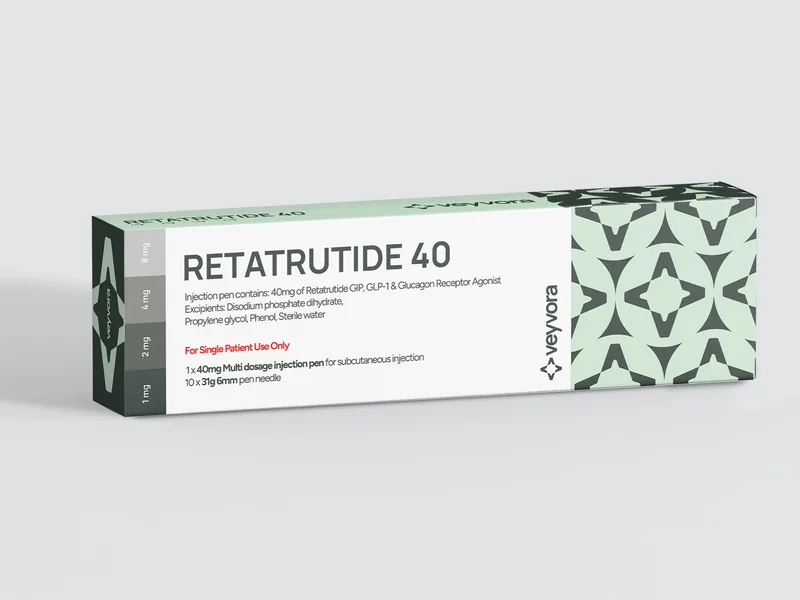
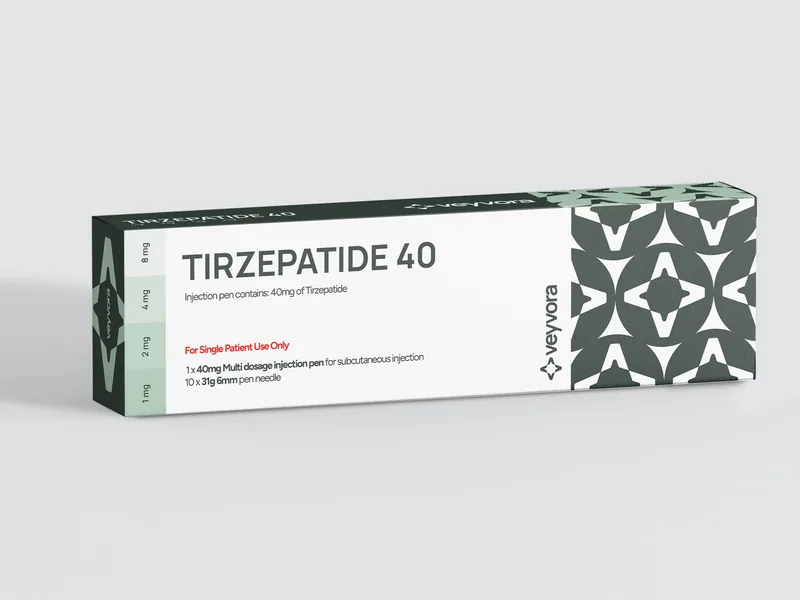
dosing guides for this category: Retatrutide 40·Tirzepatide 40
Key Takeaways
- The two receptor-coverage tiers Veyvora stocks, dual GIP/GLP-1 and triple GIP/GLP-1/glucagon, determine which mechanistic questions each compound can address in an assay or animal model.
- Procurement decisions require verification across four distinct quality dimensions: identity, analytical documentation, pen specification, and cold-chain records.
- All materials and discussion on this page are strictly for laboratory and in-vitro research use only. No human treatment, administration or dosing guidance is provided or implied.
Dual agonist peptides such as Tirzepatide and triple agonist compounds such as Retatrutide are the two receptor-coverage tiers Veyvora stocks in this category. Each tier is defined by the number of receptors engaged: Tirzepatide engages the GLP-1 and GIP receptors; Retatrutide engages GLP-1, GIP and glucagon receptors simultaneously, adding glucagon receptor activity that the dual agonist does not cover. For context, a single GLP-1 agonist activates the glucagon-like peptide-1 receptor only, but Veyvora does not stock a single-agonist compound. That receptor-coverage hierarchy is the primary mechanistic distinction between catalogue entries in this class, and the correct starting point for any procurement or assay-design decision.
What This Category Covers
This category covers peptide ligands classified by receptor engagement profile: dual GIP/GLP-1 agonists such as Tirzepatide and triple GIP/GLP-1/glucagon agonists such as Retatrutide, supplied strictly for laboratory and in-vitro research use. A 2025 systematic review of GLP-1 receptor-agonist obesity therapies uses “GLP-1 receptor agonists” and “GIP/GLP-1 dual agonists” as mechanistic class terms defined by receptor engagement, not by guaranteed outcome in any specific research material [2]. That framing sets the correct boundary: receptor profile describes pharmacology; it does not imply a result in a given assay or model.
The procurement framework that follows covers identity verification, batch documentation, pen specifications and cold-chain records. Researchers assessing purity data should note that each analytical method addresses a different quality dimension; for a detailed explanation of what chromatographic data does and does not establish, see what HPLC purity does and does not prove.
Research Areas and Catalogue Entities
Veyvora’s metabolic research peptide category lists compounds classified by receptor engagement profile: dual GIP/GLP-1 agonists and triple GIP/GLP-1/glucagon agonists. All materials are supplied strictly for laboratory and in-vitro research use only.
Verified Catalogue Entities
Two compounds are confirmed within this category from current Veyvora source content:
- Tirzepatide, classified as a dual GIP/GLP-1 receptor agonist. The 2025 systematic review identifies tirzepatide’s receptor profile as GLP-1 and GIP co-engagement [2]. Veyvora lists Tirzepatide for laboratory research use only, as of 2026.
- Retatrutide, classified as a triple GIP/GLP-1/glucagon receptor agonist. The same 2025 systematic review identifies retatrutide as engaging GLP-1, GIP and glucagon receptors [2]. Veyvora lists Retatrutide for laboratory research use only, as of 2026. For compound-specific mechanism and research context, see the Retatrutide triple-agonist profile.
- Pen format, Veyvora states that the Retatrutide 40 mg pen is a pre-filled 3 mL, 300-click solution pen. The micrograms-per-click figure is product-specific and must be read from each individual product page or certificate of analysis; researchers should not treat it as a universal specification across the metabolic range. Confirm the fill mass and click dose for each compound before designing any dosing protocol for an in-vitro or animal model.
Scope Boundary
Single-agent GLP-1 receptor agonists such as Semaglutide and Liraglutide appear in comparative primary literature, but they are not part of Veyvora’s metabolic pen catalogue, which comprises the dual agonist Tirzepatide and the triple agonist Retatrutide. For a receptor-level contrast between the single-agonist and dual-agonist classes, see the tirzepatide versus semaglutide comparison. Catalogue membership cannot be assumed from comparative study inclusion alone.
Compare the Research Roles
The three receptor profiles in Veyvora’s metabolic research range differ in the number and identity of receptors engaged, which determines the mechanistic questions each compound can address in an assay or animal model.
| Compound | Receptor profile | Mechanistic class | Pen format (Veyvora-stated) | Batch documentation |
|---|---|---|---|---|
| Tirzepatide | GLP-1 + GIP | Dual agonist | Pre-filled 3 mL, 300-click solution pen; confirm per-click dose on live page | CoA: confirm per batch |
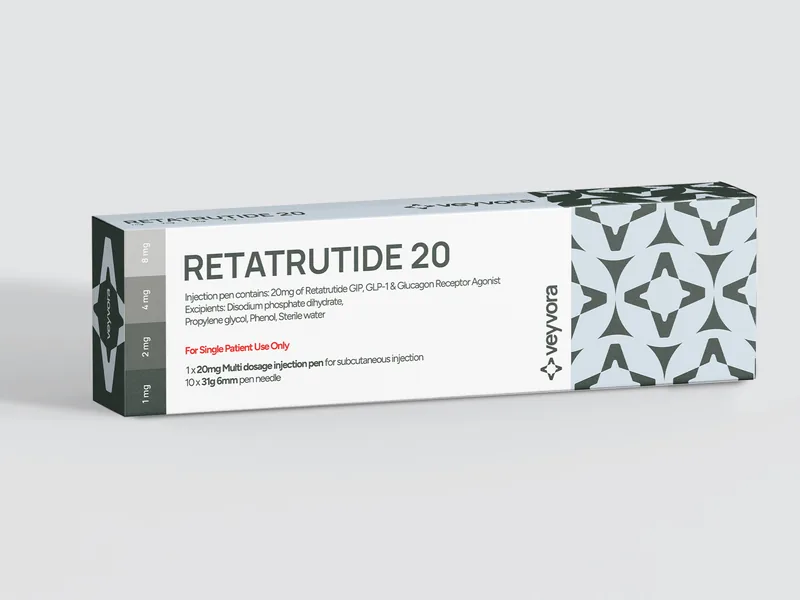
| Retatrutide | GLP-1 + GIP + glucagon | Triple agonist | Pre-filled 3 mL, 300-click solution pen (20 mg variant confirmed) | CoA: confirm per batch |
Receptor assignments above reflect the 2025 systematic review of GLP-1 obesity therapies, which uses these mechanistic class descriptors for an obesity evidence review [2]. Retatrutide’s additional glucagon receptor engagement, relative to tirzepatide’s dual GIP/GLP-1 profile, is the primary reason a researcher would select one compound over another for a given in-vitro or animal study, because glucagon receptor activity introduces a distinct downstream signalling pathway that the dual agonist does not cover.
Veyvora’s metabolic range comprises only these two compounds; single-agent GLP-1 agonists such as Semaglutide appear in the comparative literature but are not catalogue members.
Pen Specification and Click Dose
The pre-filled 3 mL, 300-click solution-pen format is confirmed for the Retatrutide 40 mg variant from current Veyvora source content. The micrograms-per-click value is calculated from total fill mass divided by click count and is therefore product-specific; researchers cannot read that figure across from one pen to another. Those moving from this category comparison to verified product specifications should consult the Retatrutide 40 mg research pen page directly, and review research peptide storage and stability guidance before designing any cold-chain or handling protocol.
Evidence Boundaries
Published evidence for GLP-1 receptor agonists, dual agonist peptides and triple agonist compounds spans three distinct tiers, and conclusions drawn from one tier cannot be transferred to another without qualification.
Mechanistic and preclinical evidence establishes receptor engagement and downstream signalling in cell assays or animal models. The 2025 systematic review identifies retatrutide’s additional glucagon receptor engagement as the mechanistic feature that distinguishes it from tirzepatide’s dual GIP/GLP-1 profile [2]. The two compounds therefore activate different receptor combinations and produce distinct downstream signalling patterns in experimental systems. That characterisation reflects receptor-level pharmacology and does not establish equivalent effects in other species, cell lines or experimental systems.
Clinical trial evidence for tirzepatide is more extensive than for retatrutide as of 2025, with tirzepatide supported by randomised controlled trial data in human populations, while retatrutide’s published depth remains weighted towards phase-2 and early comparative work [2]. The 2025 systematic review uses “GLP-1 receptor agonists” and “GIP/GLP-1 dual agonists” as mechanistic class descriptors for an obesity evidence review, not as confirmation of efficacy for any specific research material [2].
What cannot be concluded: preclinical receptor-engagement data does not predict human clinical outcomes, and no evidence tier justifies treatment, administration or dosing guidance. All materials discussed here are for laboratory and in-vitro research use only.
Researchers assessing batch-level quality alongside these evidence tiers should consult how to read a CoA to match certificate data to the batch number on the pen, or review the metabolic research pen stack for compound combination context.
Laboratory Procurement Checks
Before ordering any metabolic research peptide, verify four distinct quality dimensions: identity, analytical documentation, pen specification and cold-chain records. No single test covers all four, and a gap in any one of them limits the interpretability of downstream experimental data.
Identity and batch documentation. Confirm that the certificate of analysis names the peptide sequence or analogue identity explicitly, states the batch or lot number, records the date of testing and lists the storage conditions. The CoA should specify which method addressed which quality attribute: HPLC for chromatographic purity and impurity profiling, mass spectrometry for molecular mass and identity confirmation, and endotoxin assay for pyrogenic bacterial contamination. These methods are complementary because each targets a different failure mode; none establishes all quality attributes of a peptide material in isolation. For a detailed account of what HPLC purity does and does not prove, see what HPLC purity does and does not prove before interpreting the purity field on any CoA.
Pen specification. Pen format, fill volume, click count and dose per click vary by product. Veyvora states a pre-filled 3 mL, 300-click solution-pen format for its research pens, with per-click delivery figures that differ between products. Confirm the specification for each individual pen against its product page before procurement, as per-click figures must be verified for the specific product in question rather than assumed from another pen in the range.
Cold-chain and handling records. Veyvora states that research pens are dispatched under documented cold-chain conditions in an insulated bag with a gel ice pack, as of 2026. Any sign of a temperature excursion on arrival should prompt direct consultation of the supplier’s current handling documentation rather than an inference of acceptability. No independent validation of this shipping process was retrieved for this article.
View the Retatrutide 40 mg research pen to confirm fill volume, click count and per-click delivery before placing a laboratory order.
Related Research and Comparison Pages
Researchers who have worked through the receptor-profile comparison and procurement framework above typically have one of two immediate next steps: understanding the mechanistic detail of a specific compound, or confirming the product specification before placing an order.
For a direct receptor-coverage and evidence contrast between the two catalogue compounds, the retatrutide vs tirzepatide comparison sets the dual against the triple agonist. For the mechanistic step, the Retatrutide triple-agonist profile sets out the compound-specific receptor engagement, published research context and evidence depth for the GLP-1/GIP/glucagon triple-agonist class. That page is the appropriate starting point for researchers who need to characterise Retatrutide’s receptor coverage against their assay design before procurement.
For the product-specification step, the Retatrutide 40 mg research pen carries the verified fill volume, click count and per-click delivery figure for that specific pen format, and the Tirzepatide 40 mg research pen page carries the equivalent specifications for the dual-agonist compound. Confirm those values directly on the product page and cross-reference them against the batch-specific certificate of analysis before finalising any laboratory order.
Sources
[2] Efficacy and safety of retatrutide, a novel GLP-1, GIP, and glucagon receptor agonist for obesity treatment: a systematic review and meta-analysis of randomized controlled trials, pmc.ncbi.nlm.nih.gov, https://pmc.ncbi.nlm.nih.gov/articles/PMC12026077/
complete the stack.
bundle & save
Lean Stack
Dual-agonist weight management with cellular energy underneath.
 Tirzepatide 40
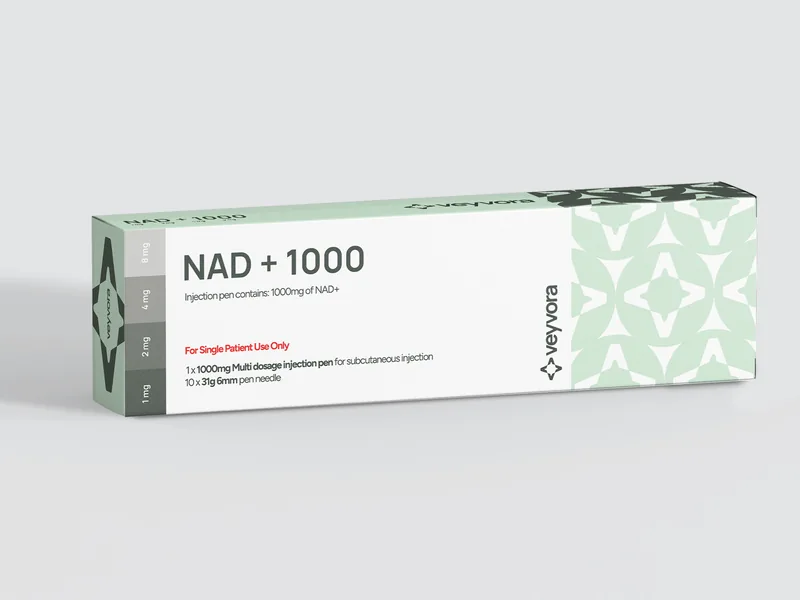
NAD+ 1000
Tirzepatide 40
NAD+ 1000
bundle & save
Advanced Lean Stack
Triple-agonist fat loss, cellular energy and visceral-fat support, the full lean protocol.
Retatrutide 40
NAD+ 1000
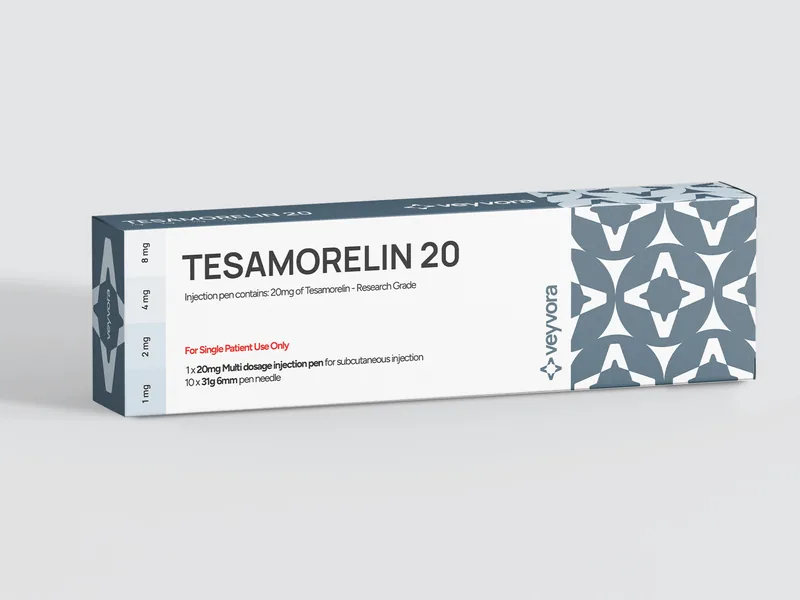
 Tesamorelin 20
bundle & save
Metabolic Reset
Mitochondrial support underneath a dual-agonist protocol.
MOTS-C + SS-31 40
Tirzepatide 40
bundle & save
Advanced Metabolic Reset
The triple agonist, mitochondrial blend and NAD+, the deepest reset in the range.
MOTS-C + SS-31 40
Retatrutide 40
NAD+ 1000