BPC-157 vs TB-500
The two most-studied tissue-repair peptides are frequently framed as alternatives, but in the research they map to different pathways — which is exactly why they're so often combined rather than chosen between.
two different pathways
BPC-157 is a synthetic pentadecapeptide studied in cytoprotection and angiogenesis-related repair — tissue protection and new blood-vessel formation. TB-500, a thymosin β4-related peptide, is studied for associations with actin regulation and cell migration — the cytoskeletal machinery cells use to move. Different mechanisms, not competing versions of one.
why 'complementary' is the key word
Because the pathways are complementary rather than overlapping, combining the two lets a single research model examine both at once. That's the reasoning behind pairing them — not that one is stronger than the other.
read each on its own
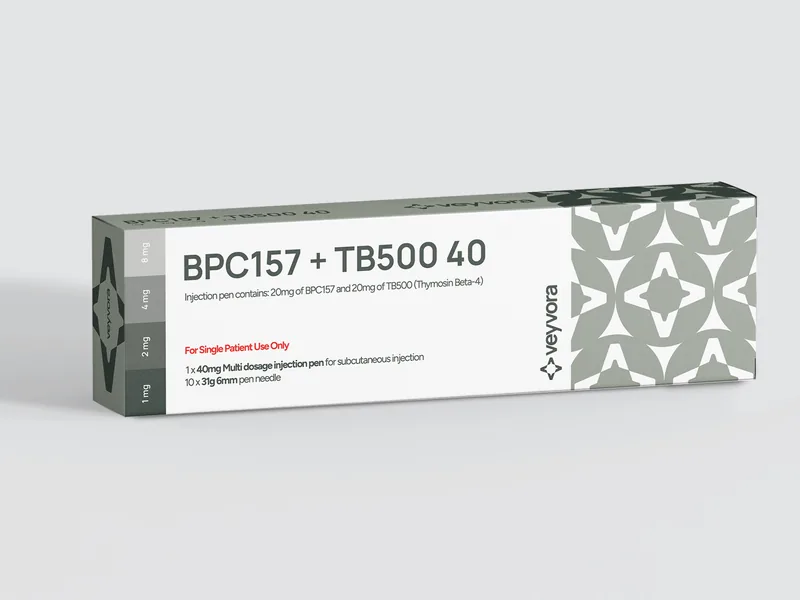
For the compound-level detail, see BPC-157 and TB-500. Both are supplied together in the BPC-157 + TB-500 research pen.
verifying the blend
For a two-compound pen, the certificate of analysis should confirm each component's identity and proportion — see how to read a CoA. More in the repair & recovery range.
research use only
Both compounds are supplied strictly for in-vitro and laboratory research use only — not medicines, not for human or veterinary consumption. Nothing here is dosing, medical or treatment guidance.
the research pens
Pre-filled, batch-numbered and independently assayed. Save one to your list and we'll email you the moment it's available in your country.