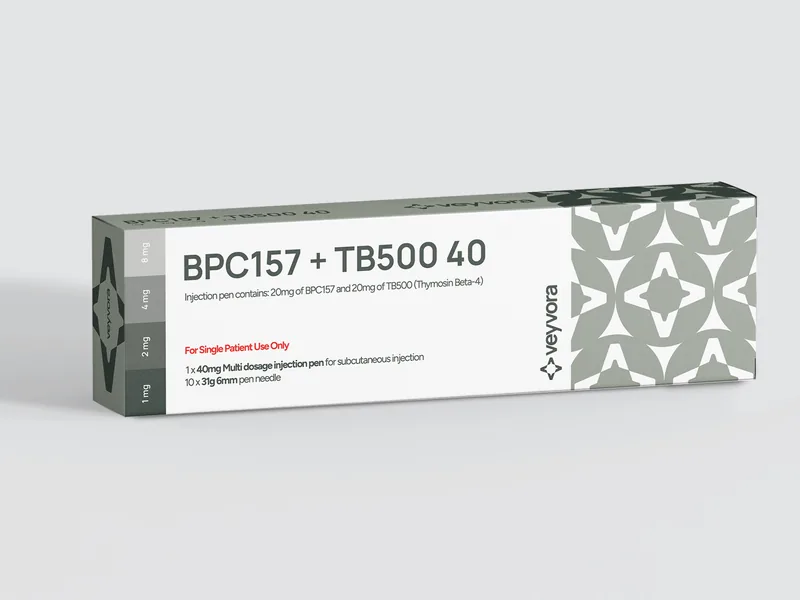

Skin & Aesthetics
Copper-peptide and repair-blend pens studied for skin, collagen and aesthetic research.
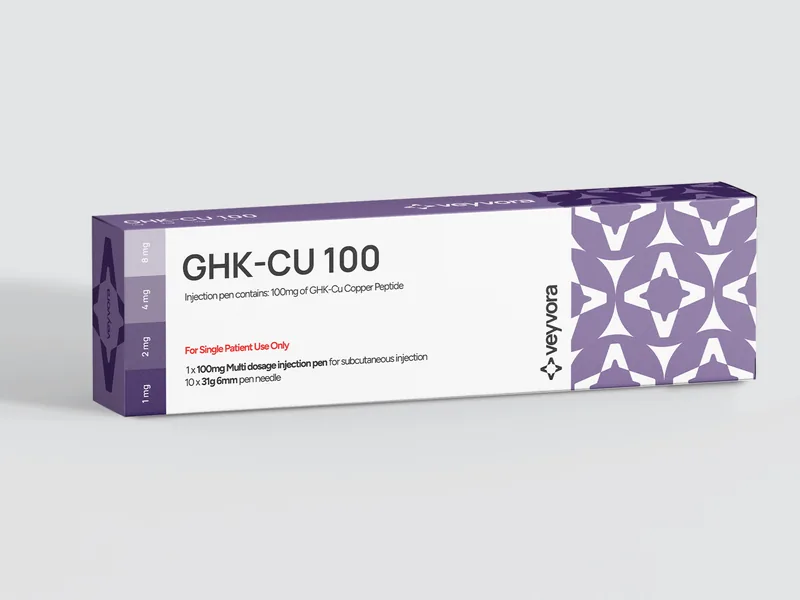
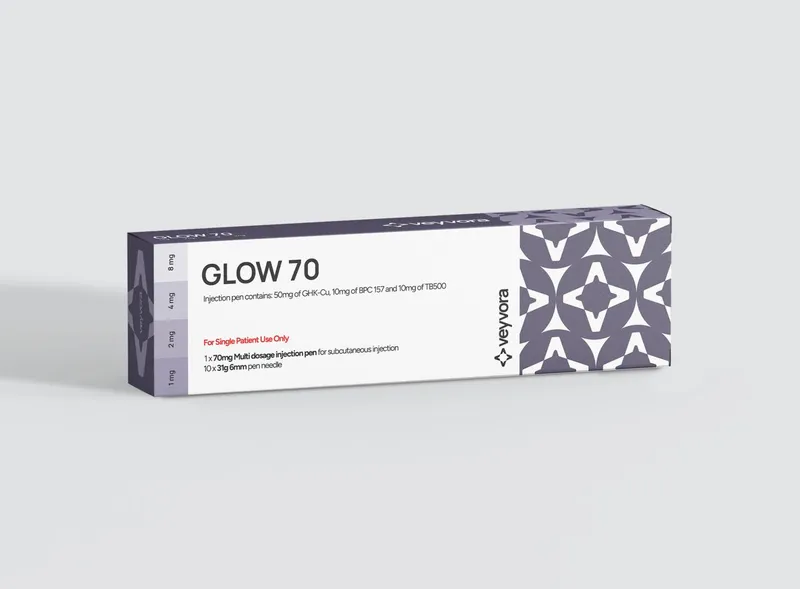
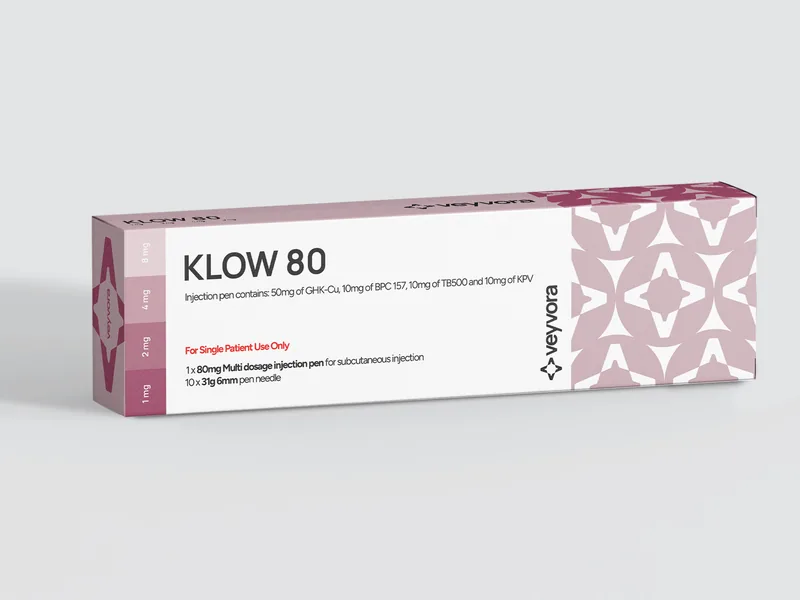
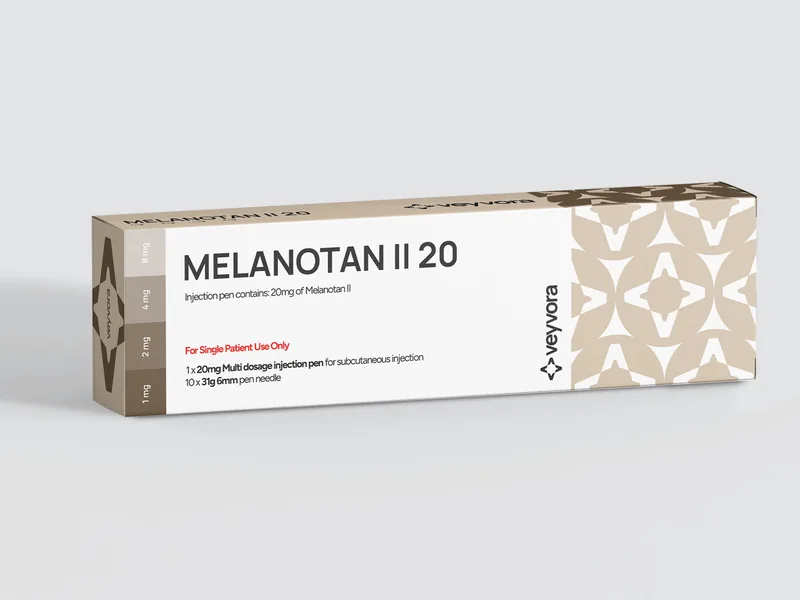
dosing guides for this category: GHK-Cu 100
Key Takeaways
Skin research peptides are synthetic or naturally derived amino acid sequences studied exclusively in laboratory and in-vitro settings to interrogate specific biological mechanisms in skin-relevant cell systems. The two principal classes relevant to this guide are copper-peptide materials, studied for extracellular matrix and fibroblast function, and melanocortin compounds, studied for MC1R (melanocortin-1 receptor)-mediated pigmentation and redox signalling in melanocyte cultures.
This guide distinguishes copper-peptide from melanocortin catalogue entities and matches each to the correct assay type, sets out the three procurement checks (regulatory status, batch documentation and cold-chain evidence) to apply before ordering, and marks where published mechanistic evidence ends and batch-specific verification begins.
All materials and discussion are for laboratory and in-vitro research use only.
Melanocortin analogues act at the MC1R to modulate eumelanin synthesis and cellular responses to oxidative stress, as characterised in 2024–2025 receptor biology reviews [5]. Copper tripeptides such as GHK-Cu (glycyl-L-histidyl-L-lysine copper complex) are selected for dermal matrix work, with 2023–2025 studies reporting modulation of matrix metalloproteinases (MMPs) and stimulation of collagen and glycosaminoglycan (GAG) production in fibroblast and ex-vivo skin models [5]. Both classes sit outside MHRA (Medicines and Healthcare products Regulatory Agency) marketing authorisation when supplied for research use; any human-use framing would engage the Human Medicines Regulations 2012 and falls outside scope [1].
Key Takeaways
- Copper-peptide materials (e.g. GHK-Cu, GLOW, KLOW) and melanocortin compounds (e.g. Melanotan II) address distinct biological questions and are not interchangeable across assay types.
- Published mechanistic findings from fibroblast or melanocyte studies characterise mechanism under controlled conditions; those findings do not validate any specific commercial batch or support human-use conclusions.
- Valid procurement requires “for laboratory and in-vitro research use only” labelling, a batch-specific CoA covering HPLC purity, impurity profiling and endotoxin results, and documented cold-chain evidence on receipt.
- Both classes sit outside MHRA marketing authorisation; materials supplied with human-use or aesthetic claims enter medicinal or cosmetic regulatory territory under the Human Medicines Regulations 2012 or Regulation (EC) 1223/2009 [1].
Research Areas and Catalogue Entities
Veyvora groups its skin-focused research materials into two distinct classes that answer different experimental questions: copper-peptide compounds studied in dermal matrix and fibroblast systems, and melanocortin compounds studied in MC1R-mediated pigmentation and redox-signalling models (Veyvora catalogue information, 2026). Treating these as interchangeable misaligns assay design with mechanism, because each class acts through a separate receptor pathway and suits a different cell system.
Copper-Peptide Materials
GHK-Cu is the principal catalogue entity in this class. In-vitro and ex-vivo studies published between 2023 and 2025 report modulation of MMP expression, stimulation of collagen IV and GAG production, and support of dermal fibroblast proliferation in cell-culture and 3D skin-equivalent models [5]. Catalogue differentiation within this class rests on sequence, copper-coordination stoichiometry, solvent system and confirmed purity by high-performance liquid chromatography (HPLC) and mass spectrometry, rather than on claimed cosmetic outcomes. The GLOW 70 mg Skin & Repair Pen is one relevant Veyvora product entity for researchers who have selected a copper-peptide-focused format; the standalone GHK-Cu 100 mg pen and the KLOW 80 mg blend are the other copper-peptide formats in this class. Confirm full device and batch specifications before procurement.
Melanocortin Compounds
Melanotan II (MT-II) is the melanocortin catalogue entity in this class: a broad, non-selective melanocortin agonist active across MC1R and MC4R, studied in pigmentation research. MC1R activation regulates eumelanin synthesis and cellular responses to oxidative stress and UV-mimetic challenge in melanocyte cultures, as characterised in 2024–2025 receptor biology reviews [5]. That means agonist potency and signalling duration are the meaningful differentiation criteria, not pigmentation outcomes in human subjects. This compound suits melanocyte monocultures and keratinocyte–melanocyte co-culture assays; it is not interchangeable with copper-peptide materials in fibroblast or extracellular matrix workflows.
Where either class also appears as an INCI (International Nomenclature of Cosmetic Ingredients)-listed cosmetic ingredient, researchers must distinguish finished cosmetic products regulated under Regulation (EC) 1223/2009 from research-grade materials purchased solely for laboratory in-vitro experiments [1]. Consult storage and stability guidance for confirmed handling conditions before committing to a procurement pathway.
Compare the Research Roles
Copper-peptide and melanocortin compounds address distinct biological questions in vitro, and selecting the wrong class for a given assay wastes both material and time. The table below maps each class against its primary research target, mechanism, typical assay context and documentation requirements. Values marked [verify with supplier] are not confirmed in current public batch records and must be checked before procurement.
| Criterion | Copper peptides (e.g. GHK-Cu, GLOW, KLOW) | Melanocortin compounds (e.g. Melanotan II) |
|---|---|---|
| Primary research target | Dermal fibroblasts; extracellular matrix | Melanocytes; MC1R-expressing cells |
| Mechanism under study | MMP modulation; collagen, elastin and GAG production [5] | MC1R agonism; eumelanin synthesis; oxidative stress response [5] |
| Typical in-vitro model | Fibroblast monoculture; 3D skin equivalents; ex-vivo skin | Melanocyte monoculture; keratinocyte–melanocyte co-culture |
| Format (Veyvora) | GLOW 70 mg Skin & Repair Pen, pre-filled 3 mL solution pen, 300 clicks, 133 µg per click | Melanotan II 20 mg pen, pre-filled 3 mL solution pen; confirm per-click dose on the product page |
| Batch documentation | HPLC, mass spectrometry, endotoxin assay; batch-specific CoA (Veyvora quality documentation, 2026) | HPLC, mass spectrometry, endotoxin assay; batch-specific CoA (Veyvora quality documentation, 2026) |
| Regulatory boundary | Research-grade material; outside MHRA marketing authorisation [1] | Research-grade material; outside MHRA marketing authorisation [1] |
| Cross-over risk | May appear as INCI ingredient in finished cosmetics, distinguish from research-grade supply [1] | Melanotan II supplied with human-use claims enters medicinal territory under Human Medicines Regulations 2012 [1] |
GHK-Cu and related copper peptides suit matrix biochemistry workflows, whereas Melanotan II and related melanocortin agonists belong in pigmentation and photobiology assays [5]. Researchers designing multi-pathway skin models should treat them as parallel tools rather than alternatives. Veyvora’s research-peptide catalogue lists current format options for both classes; confirm device specifications and batch availability directly before committing to a procurement pathway.
Evidence Boundaries
In-vitro mechanistic findings, preclinical data and clinical evidence answer different questions, and they should not be treated as interchangeable in skin research peptide selection. Studies published between 2023 and 2025 demonstrate that GHK-Cu modulates MMP expression, collagen IV synthesis and fibroblast proliferation in cell culture and ex-vivo skin models [5]; those findings characterise mechanism under controlled laboratory conditions, not cosmetic performance or safety in any specific supplier’s material. MC1R receptor biology reviews from 2024 to 2025 describe eumelanin synthesis pathways and oxidative stress responses in melanocyte monocultures [5], but they do not validate any commercial batch or support human-use conclusions.
What In-Vitro Evidence Cannot Establish
A batch-specific certificate of analysis (CoA) confirms identity, purity and endotoxin load for that batch. It does not transfer mechanistic findings from published fibroblast or melanocyte studies to the material in hand, because published studies use characterised reference compounds under defined assay conditions that may differ from those in your laboratory. Researchers should review HPLC purity results with a clear understanding of what HPLC does and does not prove: a high-purity trace confirms the dominant species, not biological activity or stability under assay conditions.
MHRA and EMA (European Medicines Agency) frameworks make clear that compounds marketed with human-use or aesthetic claims enter medicinal or cosmetic territory under the Human Medicines Regulations 2012 or Regulation (EC) 1223/2009 respectively [1]. Research-grade skin peptides supplied with “for laboratory use only” labelling sit outside those frameworks and must not be extrapolated to human outcomes.
Laboratory Procurement Checks
Regulatory status, batch documentation and cold-chain evidence are the three criteria that should govern procurement of skin research peptides for in-vitro work, ahead of any marketing language or supplier reputation claims.
Regulatory and Labelling Status
GHK-Cu and Melanotan II do not hold UK marketing authorisations, so lawful procurement requires clear “for laboratory and in-vitro research use only” labelling and, where applicable, appropriate wholesale or research licensing [1]. Any material supplied with implied human-use or aesthetic claims crosses into medicinal or cosmetic territory under the Human Medicines Regulations 2012 or Regulation (EC) 1223/2009, placing it outside the scope of research procurement. Researchers should not accept such material as a substitute for correctly labelled research-grade supply [1].
Batch Documentation
Peptide quality guidance emphasises that a valid batch record must cover identity confirmation, purity by HPLC, impurity profiling, endotoxin assay results and stability data, all presented in a batch-specific CoA [5]. Researchers should match a CoA to your pen using the batch number before any assay begins, because a CoA issued for one production run does not carry over to a subsequent batch even when the material class and supplier are the same.
Cold-Chain Receipt
For temperature-sensitive peptide materials, procurement checks should include documented evidence of 2–8 °C storage conditions and cold-chain handling consistent with current peptide stability guidance [5]. On receipt, confirm that packaging integrity and cold-chain condition are consistent with the stated conditions before accepting the batch. A compromised cold chain is grounds to reject the shipment regardless of CoA results. Consult storage and stability guidance to resolve handling questions after receipt.
Related Research and Comparison Pages
Researchers who have worked through the procurement and evidence-boundary questions above will typically need one of two next steps: full device specifications for a copper-peptide pen, or receptor-level detail on a melanocortin-class material.
For copper-peptide-focused work, the GLOW 70 mg Skin & Repair Pen page carries the complete device specification, including the 3 mL, 300-click format delivering 133 micrograms per click, alongside batch documentation requirements and cold-chain handling detail relevant to fibroblast and extracellular matrix assay planning. Where the choice is between isolated copper tripeptide and a multi-peptide blend, the GHK-Cu vs GLOW vs KLOW comparison sets out the single-analyte versus blend distinction in full.
For melanocortin receptor research, the Melanotan II 20 mg pen page covers this MC1/MC4 melanocortin material without expanding this category page into a separate product comparison.
Regulatory context for both classes is set out in MHRA guidance on borderline products [2] and the Human Medicines Regulations 2012 [1]; both serve as reference points for understanding why skin research peptides occupy a distinct position from licensed medicines and finished cosmetics.
Before placing any order, confirm current availability, destination eligibility and applicable institutional governance directly with Veyvora.
Sources
[1] The Human Medicines Regulations 2012 (SI 2012/1916), legislation.gov.uk, https://www.legislation.gov.uk/uksi/2012/1916/contents [2] Borderline products: how to tell if your product is a medicine — GOV.UK (MHRA), gov.uk, https://www.gov.uk/guidance/borderline-products-how-to-tell-if-your-product-is-a-medicine [5] pubmed.ncbi.nlm.nih.gov, pmc.ncbi.nlm.nih.gov, https://pmc.ncbi.nlm.nih.gov/articles/PMC10418475/
complete the stack.
bundle & save
Summer Stack
Pigmentation research plus entry-level metabolic support.
 Melanotan II 20
Retatrutide 20
Melanotan II 20
Retatrutide 20
bundle & save
Advanced Summer Stack
Skin repair, pigmentation and the full-strength triple agonist in one box.
GLOW 70
Melanotan II 20
 Retatrutide 40
bundle & save
Skin Stack
Copper-peptide collagen support with pigmentation research.
GHK-Cu 100
Melanotan II 20