
Growth & Recovery
Growth-hormone axis pens, secretagogues and recombinant GH studied for growth and recovery research.
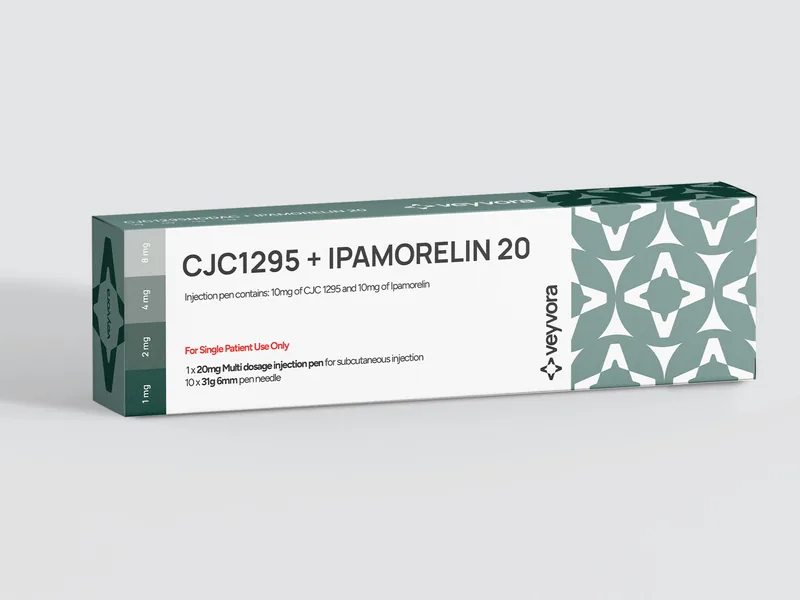
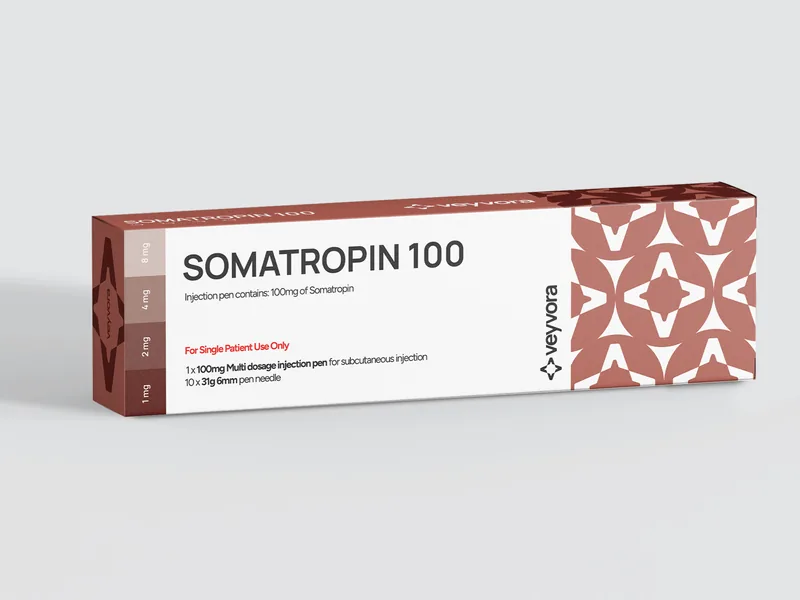
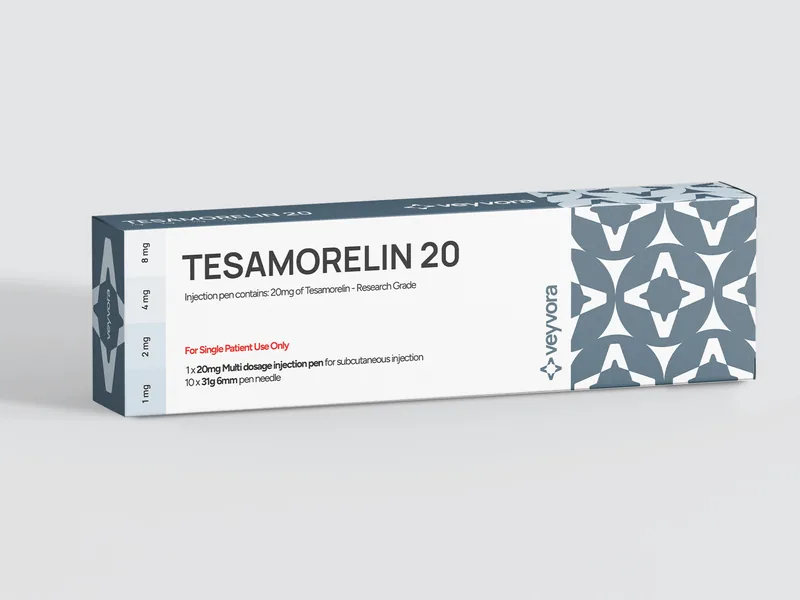
dosing guides for this category: CJC-1295 + Ipamorelin 20·Tesamorelin 20
Overview
Secretagogue research pens and recombinant GH research pens test different points in the growth-hormone axis: secretagogues act at the growth hormone-releasing hormone receptor (GHRHR) or ghrelin receptor (GHSR1a) to stimulate endogenous GH release, whereas recombinant somatropin pens supply a GH-receptor (GHR) ligand directly, bypassing pituitary signalling entirely. These two formats are not interchangeable laboratory tools; selecting the wrong class invalidates assay design at receptor level [3].
This page covers which receptor class each of Veyvora’s three confirmed pen-format entities targets, how to read a batch certificate of analysis (CoA) against the four core procurement checks, and where the boundaries of mechanistic, preclinical and clinical evidence lie for this compound category.
All materials and discussion on this page are for laboratory and in-vitro research use only. No content here constitutes human treatment, administration or dosing advice.
Veyvora’s growth and recovery catalogue currently lists three entities in pen format. Confirmed prices and live availability must be verified directly on the product page before procurement.
| Research pen entity | Mechanism class | Format (stated) |
|---|---|---|
| Tesamorelin | GHRHR agonist (secretagogue) | Multi-dose research pen |
| Somatropin | GHR agonist (recombinant GH) | Multi-dose research pen |
| CJC-1295 + Ipamorelin | GHRHR + GHSR1a dual secretagogue | Multi-dose research pen |
Veyvora states that each batch is verified by two independent laboratories using high-performance liquid chromatography (HPLC), mass spectrometry and endotoxin assay, with a batch-specific CoA available before research use (Veyvora, 2026). The 3 mL, 300-click multi-dose pen format delivers 133 micrograms per click where that specification applies; compound-specific exceptions are listed on the individual product page.
To begin the batch-verification process for a specific growth hormone research pen, retrieve the CoA linked from the relevant product page and cross-check it against the four procurement elements detailed in the Laboratory Procurement Checks section below before committing to purchase.
What This Category Covers
This catalogue category groups two pharmacologically distinct classes of laboratory tool: recombinant somatropin pens, which supply a GHR ligand directly, and secretagogue pens, including GHRHR agonists such as Tesamorelin and CJC-1295, and the GHSR1a agonist Ipamorelin, which act upstream to stimulate endogenous GH release. Because these classes act at different points in the growth-hormone axis, treating them as a single basket invalidates assay design at receptor level [3].
Veyvora’s 2026 catalogue lists three confirmed pen-format entities within this category: Tesamorelin (GHRHR agonist), Somatropin (GHR agonist, recombinant), and a CJC-1295 plus Ipamorelin blend (dual GHRHR and GHSR1a secretagogue). For deeper compound-level context on the blend, see the CJC-1295 and Ipamorelin secretagogue research page; researchers comparing the two secretagogue components individually can consult the CJC-1295 versus Ipamorelin comparison.
Research Areas and Catalogue Entities
Each of the three confirmed pen-format entities, the Tesamorelin research pen, the Somatropin research pen, and the CJC-1295 plus Ipamorelin blend, maps to a distinct receptor class and cannot substitute for another within a correctly designed assay [3].
Receptor Classes Versus Catalogue Listings
Research areas and catalogue entities are separate columns in procurement thinking. The receptor classes relevant to this category are:
- GHR (growth hormone receptor), a cytokine-receptor superfamily member signalling via Janus kinase 2 (JAK2) and signal transducer and activator of transcription 5 (STAT5); the relevant catalogue entity is Somatropin (recombinant GH), which acts directly at this receptor [3]
- GHRHR, a Gs-coupled G protein-coupled receptor (GPCR) that elevates cyclic adenosine monophosphate (cAMP); the relevant catalogue entity is Tesamorelin, a GHRH analogue acting at this receptor [3]
- GHSR1a (ghrelin receptor), also a GPCR; engaged by Ipamorelin within the CJC-1295 plus Ipamorelin blend [3]
- Dual GHRHR and GHSR1a, the combined target of the CJC-1295 plus Ipamorelin blend, which is pharmacologically distinct from either single-receptor entity because simultaneous engagement of both receptors produces a signalling profile that neither component achieves alone [3]
Catalogue Specifications
Veyvora states a 3 mL, 300-click multi-dose pen format delivering 133 micrograms per click where that specification applies; any compound-specific exception must be confirmed on the individual product page before procurement. Presentation data, pen format, labelled quantity, solvent, storage condition, should be taken only from a current dated product page or batch document, not inferred from keyword clusters such as “muscle growth research compounds”. For the detailed mechanism and evidence context behind the Tesamorelin listing, see the Tesamorelin research profile.
Compare the Research Roles
Recombinant GH and secretagogue pens test different points in the growth-hormone axis and are not interchangeable catalogue substitutes; selecting the correct format requires matching the assay’s target receptor to the compound’s mechanism of action [3].
| Entity | Receptor target | Mechanism | Primary research question | Format (verify on current product page) | Documentation |
|---|---|---|---|---|---|
| Somatropin (recombinant GH) | GHR (cytokine-receptor superfamily) | Direct GHR agonism; signals via JAK2-STAT5 [3] | How does exogenous GH ligand engage GHR in the absence of endogenous pituitary output? | 3 mL multi-dose pen, confirm specification before procurement | Batch CoA; identity by HPLC and mass spectrometry (Veyvora, 2026) |
| Tesamorelin | GHRHR (Gs-coupled GPCR) | Elevates cAMP; stimulates endogenous GH release [3] | How does a GHRH analogue modulate GHRHR-dependent signalling? | 3 mL multi-dose pen, confirm specification before procurement | Batch CoA; identity by HPLC and mass spectrometry (Veyvora, 2026) |
| CJC-1295 + Ipamorelin blend | GHRHR and GHSR1a (dual target) | Combines GHRH-receptor and ghrelin-receptor pharmacology [3] | How does simultaneous GHRHR and GHSR1a engagement differ from single-receptor stimulation? | 3 mL multi-dose pen, confirm specification before procurement | Batch CoA; identity by HPLC and mass spectrometry (Veyvora, 2026) |
Reading the Table Correctly
Somatropin is the appropriate tool when an assay requires a direct GHR ligand, because it bypasses the pituitary GPCR axis entirely and engages GHR without depending on endogenous secretagogue signalling. Secretagogues (Tesamorelin, Ipamorelin, CJC-1295) suit assays targeting GHRHR or GHSR1a pharmacology and do not replicate somatropin’s GHR binding in systems that lack the relevant pituitary GPCR axis [3]. Preserving the mechanistic distinction between direct GHR agonism and upstream secretagogue activity in assay design prevents confounded results [3].
Presentation values in the table reflect Veyvora’s documented 300-click, 133 micrograms-per-click specification where applicable; any compound-specific exception must be confirmed from a current dated product page or batch document before procurement. To understand what HPLC purity data in a CoA actually confirms, and where its limits lie, see what HPLC purity proves.
Evidence Boundaries
Three distinct evidence classes apply to growth hormone research pens, and conflating them produces unreliable procurement decisions.
Mechanistic evidence — receptor pharmacology, signalling-pathway data and in-vitro binding studies — describes how a compound interacts with GHR, GHRHR or GHSR1a under controlled laboratory conditions [3]. Mechanistic evidence does not confirm the identity, purity or activity of any specific commercial batch.
Preclinical data from animal models and ex-vivo tissue assays extends mechanistic findings into biological systems but cannot be extrapolated directly to human outcomes; the gap between rodent GH-axis pharmacology and human physiology is documented in the peer-reviewed literature [3].
Clinical evidence, where it exists for authorised somatropin products, is captured in European Medicines Agency (EMA) public assessment reports and Summaries of Product Characteristics. Those documents describe regulated medicinal products, not research-labelled pen presentations, so treating clinical data from an authorised medicine as evidence of a research-pen batch’s quality is a category error.
What a Certificate of Analysis Does and Does Not Confirm
A batch CoA reporting HPLC identity and mass-spectrometric confirmation establishes that the tested sample matched the stated compound at the time of analysis. It does not confirm in-vitro biological activity, shelf-life under the researcher’s storage conditions, or equivalence to pharmacopoeial monograph standards. Whether any research-pen batch meets Ph. Eur. or British Pharmacopoeia (BP) somatropin monograph requirements is unverified per lot and must not be assumed [1].
Regulatory classification is settled by statute and the competent authority: in the UK, the Human Medicines Regulations 2012 and the Medicines and Healthcare products Regulatory Agency (MHRA); in the EU, the EMA and Union law [1]. A merchant page or research label cannot substitute for those determinations. Where the appropriate source class for a specific claim is absent, the claim should be omitted rather than supported by forums, listicles or undated aggregators.
Researchers whose protocols concern repair and recovery rather than the GH axis may find the Repair & Recovery Research Pens category more relevant; those whose research question falls outside this range can browse Veyvora’s research peptide catalogue for adjacent tool classes.
Key Takeaways
- Recombinant somatropin pens and secretagogue pens act at different receptor classes, GHR versus GHRHR or GHSR1a, and cannot substitute for one another in a correctly designed assay [3].
- Veyvora’s three confirmed pen-format entities are Tesamorelin (GHRHR agonist), Somatropin (GHR agonist), and the CJC-1295 plus Ipamorelin blend (dual GHRHR and GHSR1a secretagogue).
- A batch CoA confirms compound identity at the time of analysis; it does not confirm biological activity, pharmacopoeial compliance or shelf-life under laboratory storage conditions [1].
- Prices and availability must be verified on the current product page before procurement.
- All materials are for laboratory and in-vitro research use only.
Laboratory Procurement Checks
A documentary procurement framework for growth hormone research pens centres on four verifiable elements: batch identity, reported analytical method, stated purity and content, and unambiguous research-only labelling. None of these elements constitutes clinical evidence.
Identity and Analytical Documentation
The batch CoA is the primary procurement document. For peptide and protein research compounds, identity confirmation typically relies on chromatographic and mass-spectrometric methods; a CoA that reports only one method warrants a query to the supplier before purchase, because a single analytical technique may not distinguish closely related structural analogues. Veyvora states that each batch undergoes independent dual-laboratory testing using HPLC, mass spectrometry and endotoxin assay, with a batch-specific CoA available for verification (Veyvora, 2026). Whether any individual batch meets Ph. Eur. or BP somatropin monograph standards is unverified per lot and must not be assumed [1].
Specification and Labelling Checks
Procurement specialists should confirm that the pen format, cartridge volume, labelled quantity per click and compound identity on the physical label match the current merchant specification exactly. Veyvora’s multi-dose pen format is documented as a 3 mL, 300-click presentation delivering 133 micrograms per click where that specification applies; the product page must be consulted for any compound-specific exceptions (Veyvora, 2026). Research-only labelling is a necessary condition for in-vitro procurement but does not itself constitute an MHRA marketing authorisation or settle regulatory classification [1].
Storage and Handling Confirmation
Stated storage conditions on the CoA and product label should be recorded at the point of procurement and matched against the receiving laboratory’s verified capability. Compound-specific handling requirements differ between secretagogue blends such as CJC-1295 plus Ipamorelin and recombinant GH presentations; general guidance on research peptide storage and stability covers the principles applicable across pen-format compounds.
Regulatory Status Confirmation
Before committing to procurement, confirm that the intended research use falls within the scope of in-vitro laboratory work and that no clinical, veterinary or human-administration application is implied. The MHRA’s published guidance on research-use materials and the Human Medicines Regulations 2012 are the authoritative references for UK-based researchers [1].
Related Research and Comparison Pages
Each page below answers a distinct next task; commercial product pages and informational research pages are kept separate because the evidence each draws on differs in kind.
For the mechanism behind Veyvora’s Tesamorelin listing, the Tesamorelin research profile covers receptor-level pharmacology and the evidence context that informs laboratory use of that compound. Researchers comparing the two secretagogue components in the CJC-1295 plus Ipamorelin blend will find compound-specific handling and specification detail at CJC-1295 and Ipamorelin secretagogue research, with a side-by-side specification comparison at CJC-1295 versus Ipamorelin comparison.
Procurement specialists ready to match a physical pen against its batch-specific CoA should follow the operational procedure at how to verify a batch. That page covers the documentary steps — batch identity, chromatographic identity confirmation, purity statement and storage-condition cross-check — that sit between placing an order and beginning in-vitro work.
Retrieve the CoA linked from the relevant product page, cross-check it against the four procurement elements above, and confirm current price and availability on the product page before placing an order.
Sources
[1] hca.wa.gov, https://www.hca.wa.gov/assets/billers-and-providers/Growth-Hormone-Agents.pdf [3] PubMed, pmc.ncbi.nlm.nih.gov, https://pmc.ncbi.nlm.nih.gov/articles/PMC5816795/
complete the stack.
bundle & save
Muscle Growth
A secretagogue and recombinant GH pen, paired for growth research.
 Tesamorelin 20
Somatropin 100
Tesamorelin 20
Somatropin 100
bundle & save
Advanced Growth Stack
Nightly secretagogue pulses layered with recombinant GH.
CJC-1295 + Ipamorelin 20
Somatropin 100